Hershel Greenblat was born in Russia (now Ukraine) in April 1941; during the German invasion his mother was severely wounded. In 1943 his father imprisoned for stealing bread to feed the family, and they fled east in search of safety. A month later Hershel’s sister was born.
After the war, the family reached a displaced persons camp in the American Zone of Austria and immigrated to the United States in November 1950.
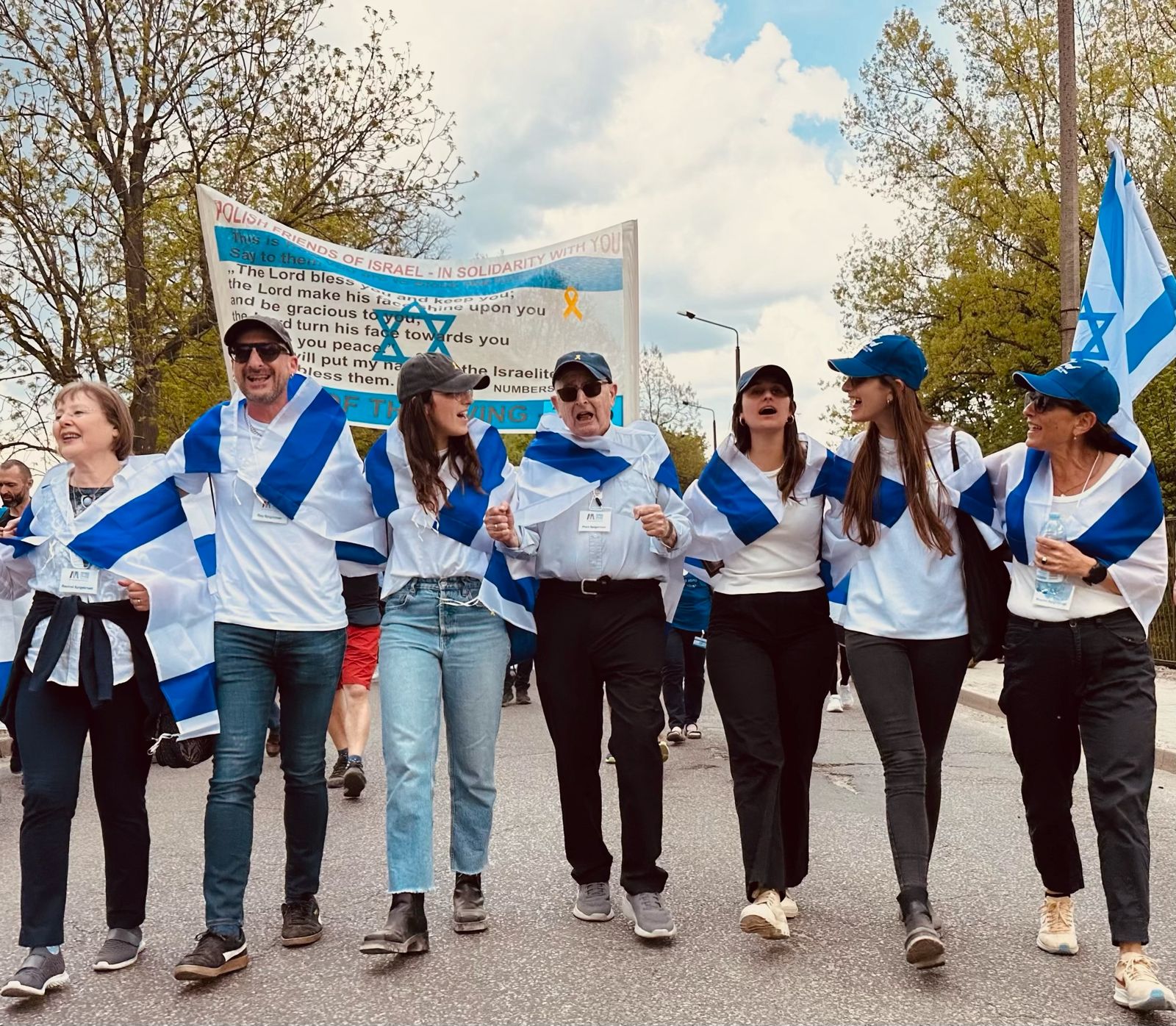
Hershel participated in several March of the Living programs. Ahead of International Holocaust Remembrance Day Hershel shared with us his thoughts about antisemitism, education and Jewish pride:
Antisemitism
“I hope and pray antisemitism is eradicated because I have an 8-year-old great grandson. I want him to grow up without hate”.
“Antisemitism after October 7 has become a call for unity. If we do not take care of one another, no one else will. Israel is our home and our refuge, and a source of strength for the Jewish people. We must show the world that our greatest strength lies in our connection to each other”.
Jewish Pride
“Despite the growing antisemitism, I have not changed my way of life or hidden my identity—on the contrary. I always show off my Star of David and my kippah. I will never hide my Judaism.
I believe this is what the world wants us to do: to disappear. But we cannot disappear, and we will not disappear.
I have become even prouder of my Judaism, attending synagogue and taking part in Jewish events. We have endured too much—my family and I have endured too much—for me to hide who I am. To do so would be a disrespect to the generations who came before me.”
March of the Living
“March of the Living is one of the greatest tools that we have to educate the younger generation. The program shows our history and show what we can accomplish together. When I go to the airport and I see 50 young students about to go on the March, they are totally changed in the best possible way when they get back. I get emails from Boston College to UCLA from former marchers about their love and acceptance of Judaism. They participate in Jewish life at their universities.”
Hope
“My family. My traditions. My teaching. Knowing that I am part of a situation where I am going to leave something. The next generation gives me hope. My youngest granddaughter is involved in a 3G group and the Daffodil Project. Young Jewish men and women are waking up to the fact that if they want to stop antisemitism, they have to work at it.