Sponsor a Holocaust Survivor – While We Still Can


“Without history there will be no memory, and without memory there will be no future.”


Holocaust Survivor Max Eisen z”l (1928-2022)

Photo: Eynat Katz

They are among the last living witnesses to the Holocaust. Their voices carry history, and moral responsibility. At a time when antisemitism is once again on the rise, and Holocaust denial and distortion are spreading globally, we spoke with March of the Living survivor-educators about why it is so crucial for them to march.

Georgine Nash was born in Budapest in 1937. She survived the Holocaust through what she calls “a series of miracles,” hiding with her mother and living to see liberation in 1945, while many members of her family were murdered.

“My motivation to take part in the March of the Living is to share my experiences, my fears, and my hopes for the future of the Jewish community,” Georgine says.

For Georgine, the March of the Living is no longer only about preserving the past, but about responding to the present:

“In light of rising antisemitism and the events of October 7, I have felt fear and hopelessness at times. But I continue to speak because it is essential that the horrors of the Holocaust are remembered and passed on. My message to students is simple: keep talking about what you have learned from survivors and stand up to anyone who denies what happened. Never again.”


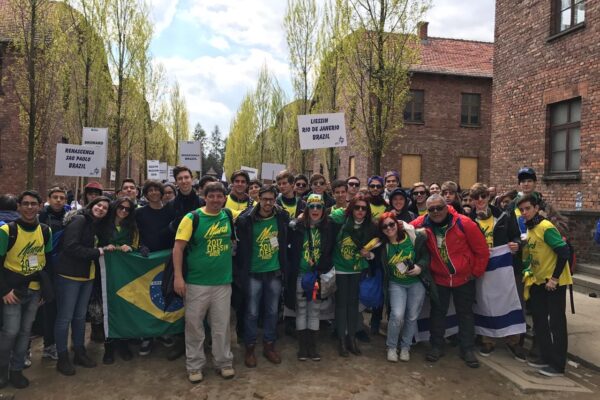
Many survivors hope to march this Yom HaShoah with students at the International March of the Living in Auschwitz.


To make this possible, they need your help.


Gabriella Karin, born in Czechoslovakia in 1930, has dedicated herself to educating young people, especially 17–18-year-olds, about the reality of life under Hitler’s regime.

“I speak to teenagers about our history, history that I was personally a part of”, Gabriella explains.

“When I talk to them, I see something extraordinary happen. They begin to mature. They develop feelings and a deeper connection to Judaism. That transformation affected me as well. Despite my age, I know I must continue to speak and spread the truth about the atrocities committed under Hitler’s regime. We have a responsibility to educate young people about the facts of World War II.”

Reflecting on the sharp rise in antisemitism since October 7, Gabriella wants to send a message to the world:

"I am frustrated, but not afraid. It doesn’t matter what color our eyes are, what color our hair is, or what color our skin is—we are all the same people. We don’t have to love everybody, but we do have to respect every person in this world. We all have the right to be here.”

Gabriella is a firm believer in education:

“I come to the March of the Living because education is the most important part. I hope people will realize that we all have the right to be here, and that the world can change.”
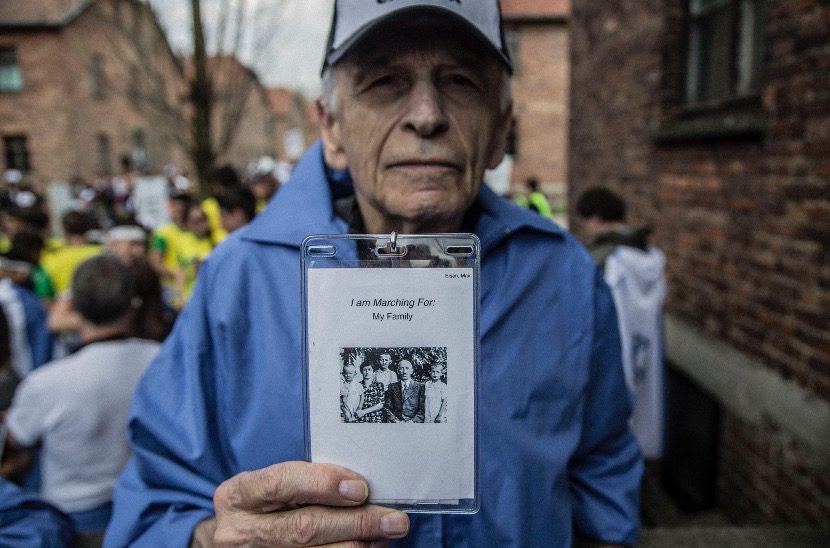

 

Max Eisen z”l, was born in 1929, in Moldava, former Czechoslovakia. Max had two brothers and a younger sister. In spring 1939, Max and his family were deported to Auschwitz-Birkenau. Max worked in slave labor with his father and uncle, but in September 1944, the two were selected out, leaving Max alone. Max survived a death march to Mauthausen, Melk and Ebensee. He was liberated by the US Army on May 6, 1945.

Max participated in 18 March of the Living journeys where he retold his story as a young boy in Auschwitz to thousands of teenagers.

  As he warned just before he passed away in 2022:  

“We, the survivors, have a very difficult job. We’re up against a huge steamroller. Without history there will be no memory, and without memory there will be no future.”